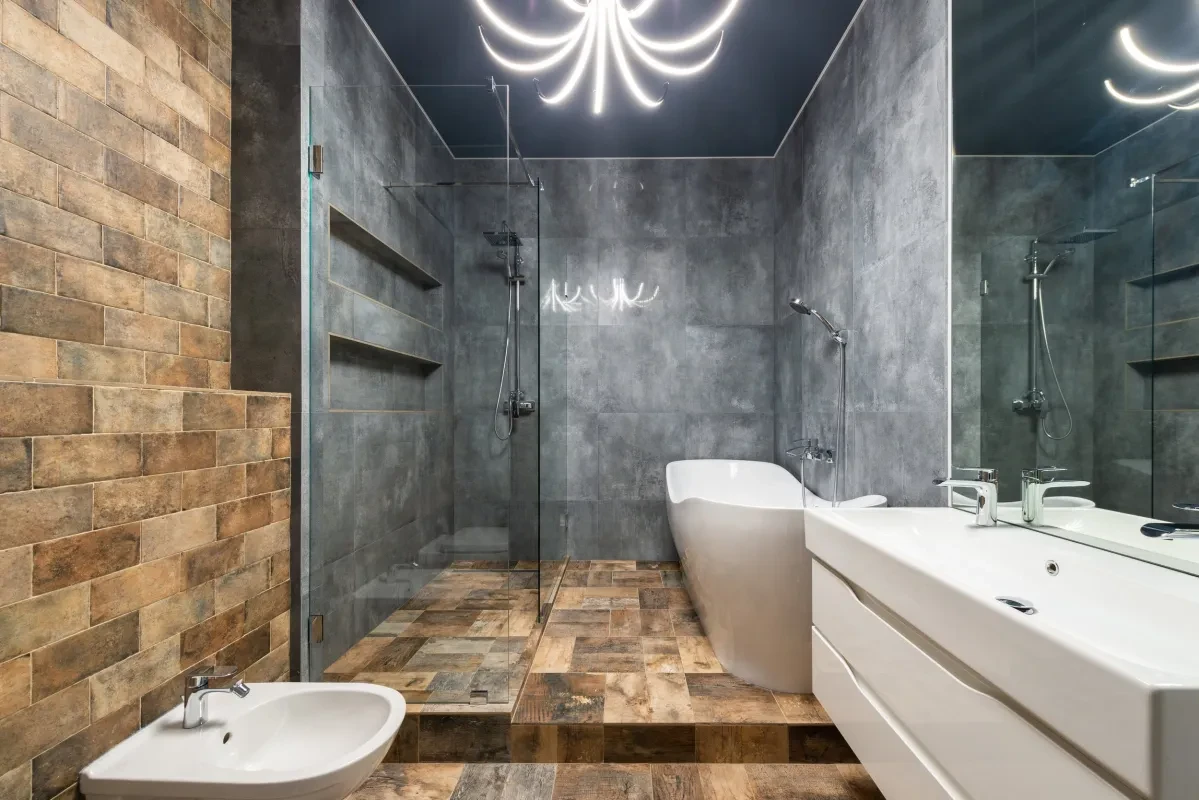
Shower tile is one of the first selections owners make and one of the hardest to change later. Each of the main options asks something different of you.
Marble
Marble is a common choice for high-end showers. Carrara has soft gray veining; Calacatta has bolder veining on a whiter background. Marble is porous and softer than porcelain, so it needs sealing and gentler cleaners, and it can etch from acidic products.
Porcelain
Porcelain is dense, holds up to water and heavy use, and can be made to look like marble, wood or concrete. Large-format porcelain panels mean fewer grout lines, which means less grout to clean. Wood-look porcelain gives the look of wood in a wet area without the maintenance.
Glass
Glass tile reflects light, which helps a small or dark shower feel larger. It comes in many colors and is often used as a mosaic accent wall or a border. Because the back of the tile shows through, the setting material and installation have to be clean and even.
Natural Stone
Slate, travertine and limestone have textured surfaces and earthy colors. Like marble, they need sealing and regular care to keep their finish in a wet area.
Handmade Tile
Hand-painted ceramic and hand-cut mosaic tiles vary from piece to piece, which is the point. They work well as a focal wall or niche. Expect longer lead times and more installation labor than with manufactured tile.
Choosing
Decide on tile early, along with the rest of your finish selections, because it affects the budget, the lead time and the waterproofing detail behind it. An interior designer can help narrow the options; we price each choice while the plans are still flexible.